
3–7 Days: When UK Exterior Paint Jobs Need Scaffolding and a Site Checklist
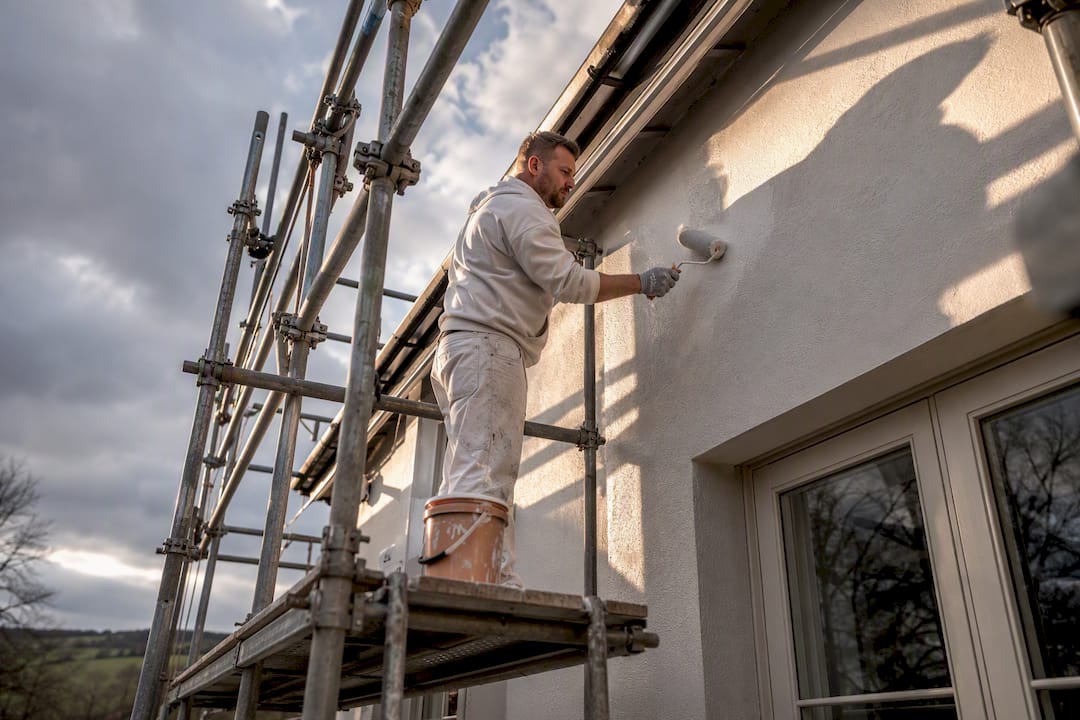
Most two-storey homes need scaffolding for a full repaint, and it stops being optional once the job runs beyond a day or two or the walls have awkward features like dormers or steep gables. If your house is single-storey with easy ground access, a mobile tower or a well-used ladder can be enough. Anything higher or more complex than that, stop and get a site assessment from a scaffold hirer or painting contractor before you climb anything.
TL;DR:
Two-storey homes with complex features, gables, or dormers almost always require independent scaffolding for safe and efficient painting.
For projects lasting more than a few days or with intricate rooflines, a stable scaffold provides better coverage and finish quality than ladders or mobile towers.
Scaffold safety depends on proper ground preparation, weekly inspections, and compliance with regulations, especially when working over public streets.
Hiring scaffolding is usually more cost-effective for occasional homeowners, while ownership is justified only for multiple or ongoing maintenance projects.
Proper coordination between scaffold setup and painting schedules prevents delays and ensures safety, particularly on uneven or sloped ground.
Table of Contents
Types of scaffolding and which option fits each painting task
Hire versus buy: costs, licences and practical decision points
Detailed step-by-step guide on assembling and dismantling scaffolding safely
Common hazards and risk mitigation strategies specific to house painting scaffolding
Personal protective equipment (PPE) requirements for workers on scaffolding
Maintenance and inspection checklist to ensure scaffold stability during the painting project
When do you need scaffolding for house painting?
The height of your house is the first filter, but it is not the only one. A bungalow with flat, firm ground rarely needs anything beyond a mobile tower or a sturdy ladder. Add a second storey, and the calculation changes fast, partly because of what the Work at Height Regulations 2005 expects of anyone carrying out work at height, and partly because gutters and eaves on a two-storey wall sit well beyond safe ladder reach.
Several triggers push a job from “ladder will do” into “you need proper scaffolding for house painting”:
Two storeys or more, especially with gable ends or dormer windows
A job expected to take several days rather than a single afternoon
Complex rooflines, chimneys, bay windows, or conservatory roofs breaking up the wall
Sloping ground where a ladder or tower cannot sit level without extra work
Rendered or textured finishes that need slow, even coverage across a large area
There is a productivity argument too, and it is easy to underestimate. A stable platform lets you work along a continuous stretch of wall without constantly climbing down to shift a ladder, which shows up directly in the quality of the finish. Painters who work from towers rather than ladders tend to produce a more even coat simply because they are not breaking their rhythm every few minutes to reposition.
Types of scaffolding and which option fits each painting task
Not every job needs the same rig, and picking the wrong one either wastes money or leaves you working somewhere unsafe. Here is how the main options break down.
Option | Typical working height | Best for | Mobility/portability | Setup complexity |
Independent supported scaffolding | Full building height, multi-storey | Whole-house exteriors, complex facades | Fixed once built, not portable | High, needs a competent erector |
Mobile aluminium tower | Roughly 3m to 7m | Single and two-storey exteriors, most DIY jobs | Wheeled, movable along a wall | Moderate, follow manufacturer instructions |
Folding/stairwell platforms | Ceiling height to around 3m | Interior ceilings, stairwells, tight corners | Very portable, folds flat | Low |
Cantilever or overhang rigs with sheeting | Varies by structure | Bay windows, awkward roof junctions, weather protection | Limited, semi-permanent for the job | High, specialist setup |
Independent scaffolding, built up from the ground with vertical standards and horizontal ledgers, is the standard choice for a full exterior repaint on anything two storeys or taller. It gives continuous coverage across the whole facade and can be boarded out at every level, which is exactly what a multi-day paint job needs. The trade-off is cost and the requirement for a competent erector, since this is not a DIY build.
Mobile aluminium towers cover most domestic jobs that do not need a full wraparound rig. They are commonly recommended for exterior painting tasks with working heights between about 3m and 7m, light enough to move along a wall as you work, and quick to assemble if you follow the instructions properly. The catch is ground condition: towers need a firm, level base, and soft or sloping lawns can rule them out without extra preparation.
Folding platforms and stairwell units solve the opposite problem: high ceilings, stairwells, and tight interior spaces where a full tower would not fit. For exterior jobs with genuinely awkward geometry, such as a bay window jutting out under a hip roof, a cantilever section or temporary sheeting rig fills the gap that standard towers cannot reach safely.
Safety, legal requirements and standards to follow
The Work at Height Regulations 2005 set out a clear hierarchy: avoid work at height where you can, prevent falls where you cannot avoid it, and minimise the distance and consequences of a fall if it happens anyway. For homeowners commissioning painting work, that translates into a practical duty to provide, or ensure a contractor provides, safe access rather than leaving anyone balancing on a ladder against a chimney stack.
Falls from height caused a significant proportion of construction workplace deaths in 2023, according to HSE statistics, the single largest cause of fatal injury in the industry. That figure covers construction generally, but it is exactly the risk category that painting at height falls into.
Any scaffold, whether it is a full independent structure or a mobile tower, needs certain features before anyone should climb it:
Guardrails at the correct height on every open edge
Toeboards to stop tools and debris falling
Boards or planks rated for the load they will carry, with no gaps
A stable, level base with the load spread evenly across the feet
Mobile towers used in the UK are commonly built and tested to EN 1004, the standard covering design, manufacture, and testing for this type of equipment. Buying or hiring a tower that carries this standard is a reasonable baseline check before you commit.
Inspection is not a one-off tick box. Scaffolding should be checked weekly and again after any severe weather, and hire contracts usually spell out who is responsible for that. Full independent scaffolds should only be put up by a competent erector, not assembled DIY, because the tolerances for bracing and tying into the building are not forgiving of guesswork.
Hire versus buy: costs, licences and practical decision points
For almost every homeowner, hiring wins over buying, and the reasoning is straightforward once you look at how the costs actually break down.
The main cost drivers are the size of the house, how many sides need access, how long the job will take, and whether the site sits on a public pavement or road. A two-storey home painting project typically runs three to seven days, and hire costs scale with that duration alongside the complexity of the elevation. Costs vary enough between properties that a fixed figure is not much use. A site visit from the hire company or your painting contractor is the only reliable way to get an accurate number, and it usually costs nothing to arrange. If you are also budgeting the painting work itself, checking a benchmark cost guide for exterior painting alongside the scaffold quote gives you a fuller picture before you commit.
If any part of the scaffold needs to sit over a public footpath or road, you will likely need a pavement or road licence from your local council. Councils such as Kent County Council publish the relevant permit forms, and in practice most scaffold hire firms handle this application as part of the job rather than leaving it to the homeowner.
A simple rule of thumb: hire for a one-off repaint or an occasional job, and only think about buying if you are repainting multiple properties or doing repeated maintenance work over several years. For most households, the maths never tips towards ownership.
Site assessment and setup checklist (step by step)
Get the ground and the base right and most other problems sort themselves out. Rush this stage and you are asking for a wobble halfway through week two.
Walk the site before anything arrives. Check for soft soil, slopes, drains, and any obstacles like flower beds or garden furniture in the way.
Check for underground services. Irrigation lines and shallow drainage pipes are common in residential gardens and can shift under a loaded base.
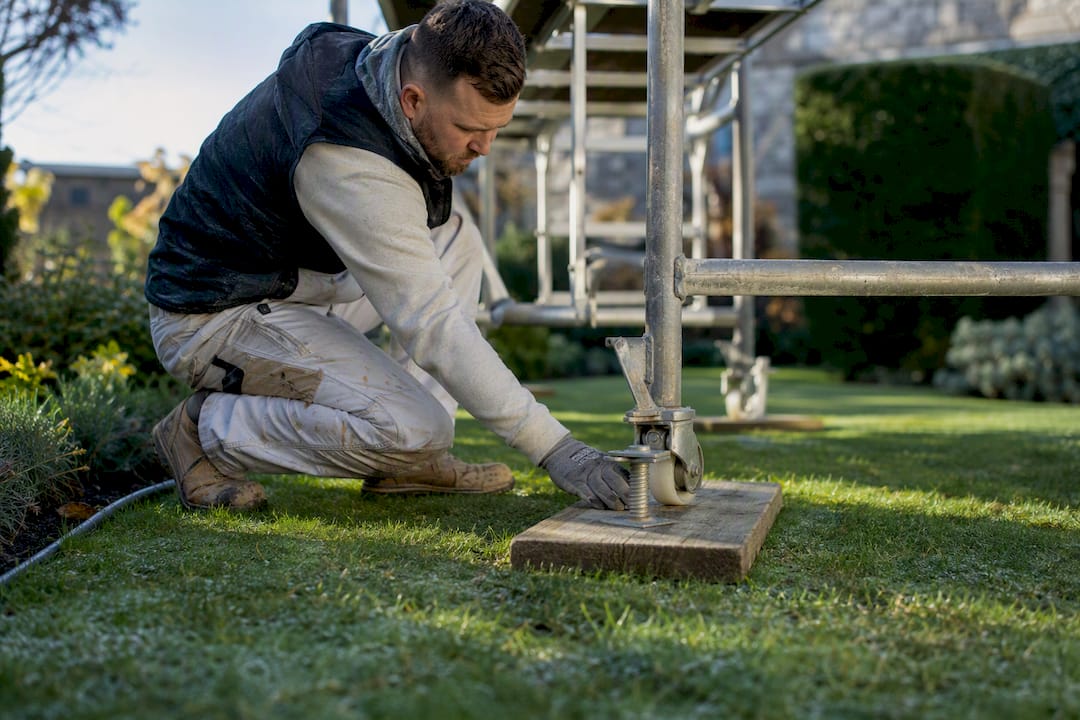
Prepare the base properly. Use mud sills or base plates on soft ground, with outriggers and levelling jacks to correct any slope. Bricks or paving slabs are not an acceptable substitute for proper levelling gear.
Assemble with discipline. Fit guardrails and toeboards before anyone climbs, use rated planks only, and keep the load spread evenly across the structure rather than piled on one section.
Set a daily inspection routine. Check ties, bracing, and board condition each morning before work starts, and record anything you tighten or replace.
Know your stop-work triggers. High wind, damaged planking, or a base that has shifted overnight all mean pause the job until it is fixed.
Pro Tip: If your garden has any irrigation pipework near the wall you are painting, mark it before the scaffold arrives. Base plates driven into a hidden pipe run is one of the most common and completely avoidable setup mistakes on residential jobs.
Alternatives to scaffolding and when they are appropriate
Ladders remain fine for short, low jobs, think fascia touch ups or a single-storey gable end, provided you keep three points of contact at all times and accept that the work will be slower and more tiring than working from a platform. Once a job stretches across a whole elevation or several days, a ladder stops being a sensible choice on safety grounds alone.
Mobile towers and hop-ups sit in the middle ground. They work well for single-storey exteriors and plenty of DIY interior jobs, but only on firm, level ground, and only when assembled to the manufacturer’s instructions rather than improvised on the day.
A few signs mean you should stop considering alternatives and go straight to full scaffolding:
The wall is two storeys or higher with no safe ladder-only access
The ground will not sit level without significant extra preparation
The job will run for more than a couple of days
Any part of the work involves reaching over a roofline, chimney, or dormer
Typical project duration and inspection frequency
A straightforward two-storey exterior repaint typically takes three to seven days from prep to final coat, depending on the size of the house, the number of elevations being painted, and the weather. Rendered or pebble-dashed finishes tend to sit at the longer end of that range because they absorb more paint and need extra coats to cover evenly.
Scaffolding left standing for that length of time is not a set-and-forget structure. It needs inspecting weekly at minimum, and again immediately after any severe weather such as high wind or heavy rain that could have shifted the base. Most hire agreements specify who carries out these checks and how they should be recorded, so it is worth reading that section of the contract before signing rather than assuming it is covered.
For jobs running close to two weeks, and some do when the weather interferes, expect the hire company to schedule at least one formal re-inspection partway through, on top of your own daily visual checks. If the scaffold is a full independent structure rather than a mobile tower, only the erecting company or another competent person should carry out that formal inspection, since it involves checking ties, bracing, and structural connections that are not always obvious from ground level.
Detailed step-by-step guide on assembling and dismantling scaffolding safely
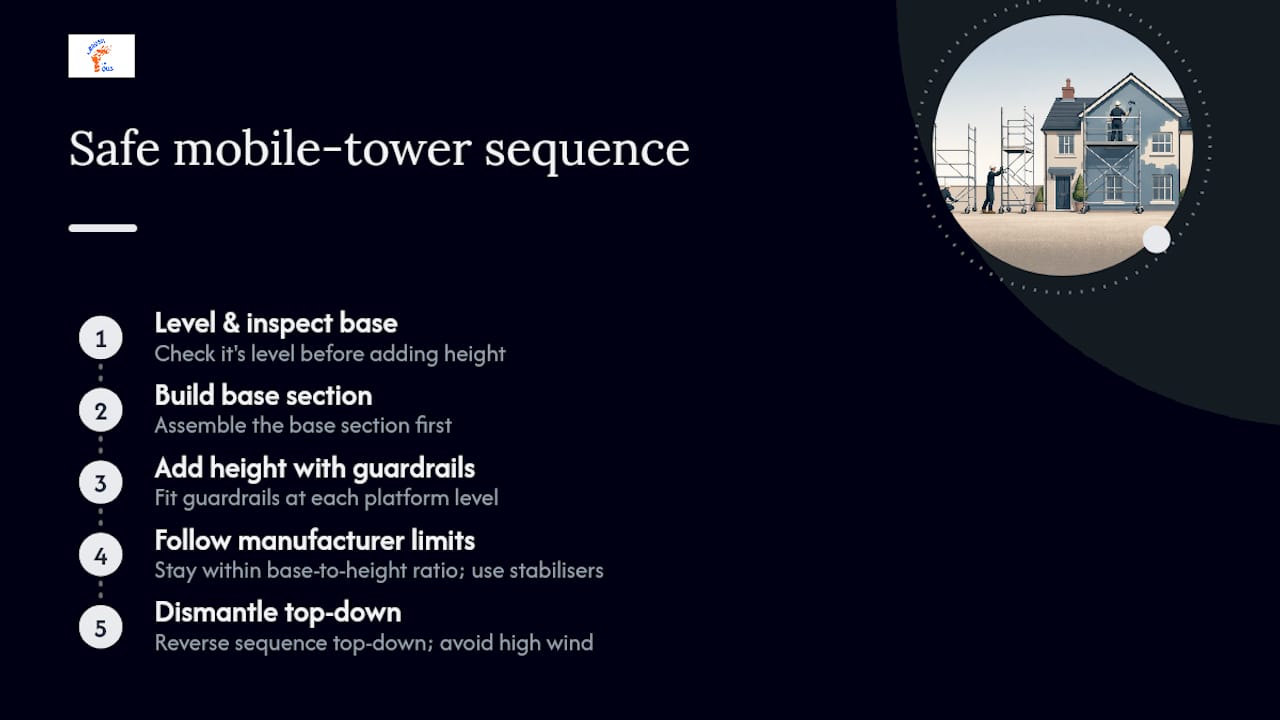
Assembly and dismantling are where most avoidable accidents happen, largely because people rush the sequence. For a mobile tower, the order matters: build the base section first and check it is level before adding height, fit guardrails at each platform level as you go rather than leaving the top open, and never climb a partially built tower to reach the next level. Manufacturer instructions will specify the maximum height for the base dimensions you are using, and going beyond that ratio without extra stabilisers is one of the most common causes of tipping.
Independent scaffolding follows the same logic at a larger scale, but it is not a DIY task. A competent erector ties the structure into the building at set intervals, braces it diagonally, and checks each lift before the next one goes up. If you are hiring a contractor for this, ask to see evidence of that competence before work starts.
Dismantling reverses the sequence exactly, and it is where fatigue tends to cause shortcuts. Remove boards and guardrails from the top down, never from the bottom up, and never leave a level partially stripped overnight. If the job pauses partway through dismantling, secure the remaining structure and rope off the area rather than leaving loose components accessible.
Weather matters at both ends. Do not erect or dismantle in high wind, and check the forecast before scheduling either job for a specific day.
Common hazards and risk mitigation strategies specific to house painting scaffolding
Paint work brings its own hazards on top of the usual scaffold risks. Spilled paint or solvent on a platform makes boards slippery fast, so keep tins in a stable tray rather than balanced on the edge of a board, and clean spills immediately rather than at the end of the shift.
Overreaching is the other painting-specific problem. It is tempting to stretch sideways to cover one more section rather than climbing down and moving the tower, and that stretch is exactly what tips people off balance. Move the platform instead of overreaching, even when it feels slower.
Residential gardens bring their own quiet hazards: soft soil, irrigation lines, and uneven ground are common enough that checking bearing capacity before loading a tower should be routine rather than optional. Weather is the final variable worth tracking daily rather than just at setup. Wind loading on a boarded platform increases with height, and most tower manufacturers specify a maximum safe wind speed for use, not just for erection.
Personal protective equipment (PPE) requirements for workers on scaffolding
A hard hat is the baseline for anyone working below or moving materials up a scaffold, protecting against dropped tools and debris. On the platform itself, non-slip footwear matters more than people expect, since painted surfaces and spilled solvent both reduce grip quickly.

Fall arrest harnesses come into play on specific tasks, particularly cantilever sections or any point where guardrails are temporarily removed for access. They are not always necessary on a fully guarded platform, but they should be available and used whenever the guardrail protection is incomplete.
Gloves suited to the paint or cleaning chemicals in use protect against skin irritation during long shifts, and eye protection matters during any pressure washing or spray work carried out from height. None of this equipment substitutes for the guardrails and toeboards themselves. PPE is the second line of defence, not the first, and treating it as the main safety measure rather than the platform’s own structural protection is a common and risky mistake.
Maintenance and inspection checklist to ensure scaffold stability during the painting project
Stability during a multi-day job depends on catching small problems before they become structural ones. Run through this list at the start of each working day:
Check the base plates and outriggers have not shifted or sunk overnight
Look for any new gaps, cracks, or splits in boards and planks
Confirm guardrails and toeboards are still secure at every level
Check ties into the building on independent scaffolds have not loosened
Note the previous night’s weather and inspect more closely after wind or heavy rain
Keep a simple written record of each check, even a few lines in a notebook. If something goes wrong later, that record shows the structure was being monitored properly, and it also helps you spot a slow-developing problem, like a base plate sinking gradually, that a single glance might miss.
Practitioner perspective from A Brush With Gus
The setup issue we see most often on residential jobs is not the scaffold itself, it is the garden underneath it. Soft borders, sloped lawns, and buried irrigation pipes catch people out more than any structural miscalculation.
Before booking a scaffold firm or a painting contractor, ask three things at the site visit: how they plan to level the base on your specific ground, what their inspection schedule looks like for the length of your job, and whether they coordinate directly with the painting team on timing. That last point matters more than homeowners expect. When scaffold hire and the painting schedule are not coordinated, you end up paying for standing time on a tower nobody is using, or worse, a painter working around a rig that was erected for the wrong access points.
— Angus
How A Brush With Gus can help with your exterior project
If coordinating scaffold hire, ground assessment, and the actual painting sounds like more juggling than you want to take on, that is exactly the gap a family-run painting and decorating service fills for homeowners across Cornwall and the South West. Rather than managing a scaffold firm and a painting contractor separately, one team handles the access planning and the finish itself.

Professional painting and decorating services include exterior painting, UPVC spraying, airless spraying, and exterior home cleaning, including pressure washing and gutter clearing, all of which can be scheduled around the same access setup rather than booking separate visits for each. A typical booking starts with a site visit, where the team assesses the property, discusses which elevations need attention, and gives a clear quote before any work begins. That visit is also where access requirements get flagged early, so there are no surprises once work starts. If your project includes a full exterior repaint alongside cleaning or UPVC restoration, the exterior home services page covers what is typically involved, and the domestic services page is the place to start a conversation about your specific property and get a quote booked in.
Sources
The safety and legal claims in this guide draw on the Work at Height Regulations 2005, which set the framework for planning safe access to height, and HSE’s falls from height statistics, which track fatal and major injury data across the construction sector.
For practical scaffold guidance specific to painting jobs, WBM Scaffolding’s homeowner guide and scaffold-tower.co.uk’s advice on painting-suitable towers cover equipment selection and working heights in more depth. If your project involves pavement or road access, check your local authority’s licensing pages, Kent County Council’s permit guidance is a reasonably representative example of what most councils require. For structurally complex or sloping sites, a professional topographic survey can settle ground condition questions before a scaffold firm quotes the job.
Recommended
Comments