
Why paint exterior structures: beauty, protection, value
TL;DR:
Exterior paint acts as a protective barrier against weather, preventing structural damage.
Proper preparation and timing are essential for a long-lasting, effective exterior paint job.
Regular inspection helps identify early signs of deterioration, avoiding costly repairs.
Most homeowners assume a fresh coat of exterior paint is purely cosmetic. It looks nice, impresses the neighbours, and that’s about it. But that view misses the bigger picture entirely. Exterior paint is one of the hardest-working materials on your home, forming a physical barrier against rain, wind, UV rays, and the persistent damp that defines South West UK weather. Professional preparation and correct timing are crucial for lasting results. In this article, we’ll walk through why exterior painting matters, when to do it, and how to spot the warning signs before small issues become expensive problems.
Table of Contents
Key Takeaways
Point | Details |
Adds value | A fresh exterior paint job makes your home more appealing and may increase property value. |
Protects against weather | Paint shields your home from damp, mould and UV damage typical in the South West UK. |
Good timing matters | Painting during the right season and conditions ensures the best finish and durability. |
Preparation is essential | Proper cleaning and repair before painting deliver longer-lasting, professional results. |
Enhancing curb appeal and property value
First impressions are made in seconds. Whether a visitor is pulling up to your home or a potential buyer is stepping out of a car, the exterior tells a story before anyone sets foot inside. A freshly painted home signals care, attention, and good maintenance. A tired, flaking exterior does the opposite, raising doubts about what else might have been neglected.
Colour choice plays a bigger role than many people realise. In the South West UK, homes sit against a backdrop of rolling countryside, coastal scenery, and traditional stone architecture. Choosing a colour that complements your surroundings rather than clashing with them can genuinely make your property stand out for the right reasons. Soft greys, warm creams, and muted greens tend to work well in this region, but the key is to consider the light, the materials, and the street context before committing.
Beyond aesthetics, the financial case is compelling. Exterior painting adds value and protects property against the elements, and a well-maintained exterior can increase perceived property value by 5% or more. That’s a meaningful return for a relatively modest investment compared to a kitchen renovation or extension.
“A well-painted exterior is often the single most cost-effective improvement a homeowner can make before going to market.”
Here’s what a strong exterior finish communicates to buyers and visitors:
Maintenance history: Fresh paint suggests the home has been looked after consistently
Structural confidence: No visible cracks, damp patches, or bare surfaces
Pride of ownership: A cared-for exterior sets expectations for the interior
Neighbourhood fit: Colours and finishes that suit the local area increase appeal
If you’re thinking about how to maximise your home’s visual impact, our curb appeal tips cover practical design decisions that make a real difference. And if you’re planning broader work, our exterior home improvements service page outlines everything we offer for South West homeowners.
Protecting your home from the elements
While appearance matters, exterior painting serves a deeper, protective role for your property. The South West UK is one of the wetter, windier parts of England. Rain comes frequently, humidity stays high, and coastal homes face salt-laden air on top of everything else. Without a sound paint barrier, your walls, timber, and masonry are exposed to all of it.
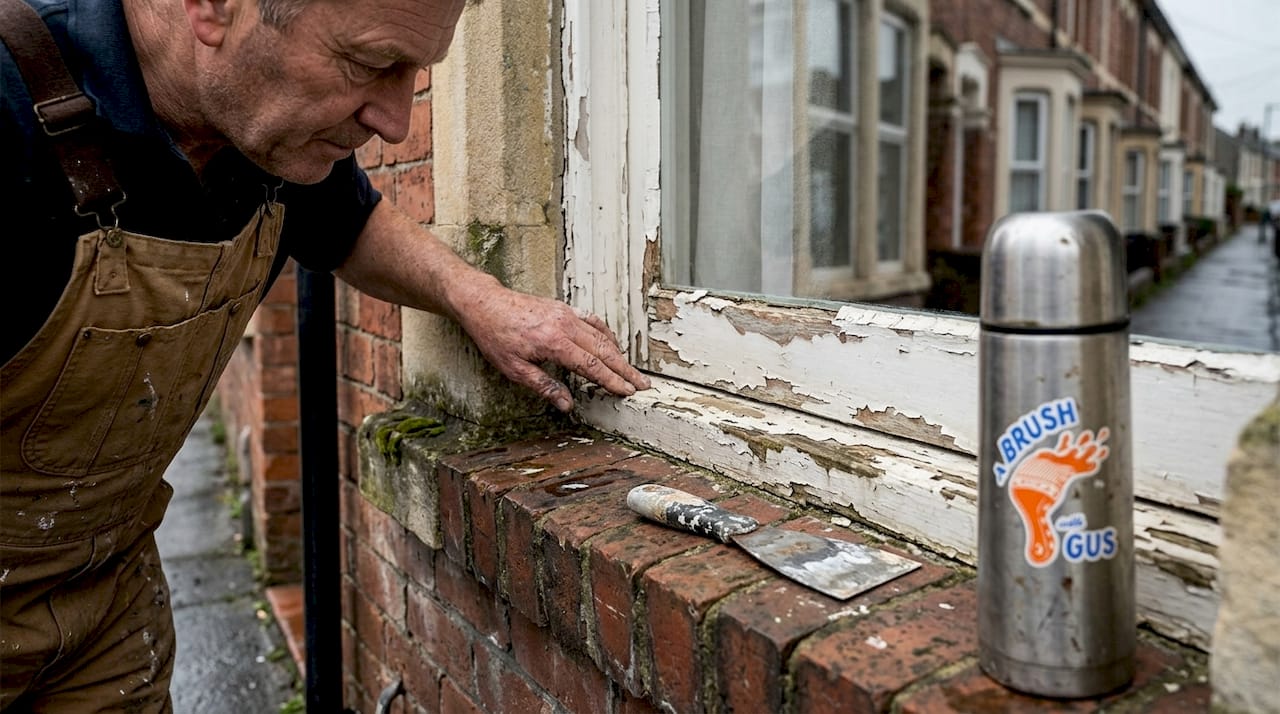
Paint works by sealing the surface, preventing moisture from penetrating the substrate beneath. When that seal fails, water finds its way into cracks, timber swells and rots, masonry begins to crumble, and mould takes hold. These aren’t cosmetic problems. They’re structural ones, and they’re far more expensive to fix than a timely repaint.
Professional preparation and weather conditions are crucial for long-lasting protection. A paint job applied over dirty, cracked, or damp surfaces will fail quickly, no matter how good the product is.
Here’s a quick overview of what quality exterior paint protects against:
Threat | How paint helps | Risk if untreated |
Rain and moisture | Forms a waterproof barrier | Damp, rot, mould |
UV rays | UV-resistant formulas reduce fading | Chalking, surface breakdown |
Wind-driven debris | Hardens and seals the surface | Surface erosion |
Salt air (coastal) | Specialist coatings resist corrosion | Accelerated weathering |
Frost and freeze | Flexible coatings prevent cracking | Spalling masonry |
The protective benefits of exterior painting go well beyond what most people expect. Many modern exterior paints include anti-fungal additives, which are particularly useful in the damp South West climate where mould growth on north-facing walls is a common problem.
Pro Tip: Before any paint is applied, clean the surface thoroughly with a pressure washer or specialist cleaner. Dirt, algae, and loose material will prevent proper adhesion and shorten the life of your finish significantly. Learn more about how weather impacts exterior paint in our dedicated guide.
Seal all cracks and gaps with exterior-grade filler before painting
Use a stabilising primer on powdery or porous masonry
Apply at least two topcoats for full coverage and protection
Choose products rated for the specific surface, masonry, timber, or render
When and how to paint for the best results
Understanding when and how to carry out exterior painting ensures maximum benefit and longevity. Timing isn’t just about convenience. It directly affects how well the paint adheres, how evenly it dries, and how long it lasts.
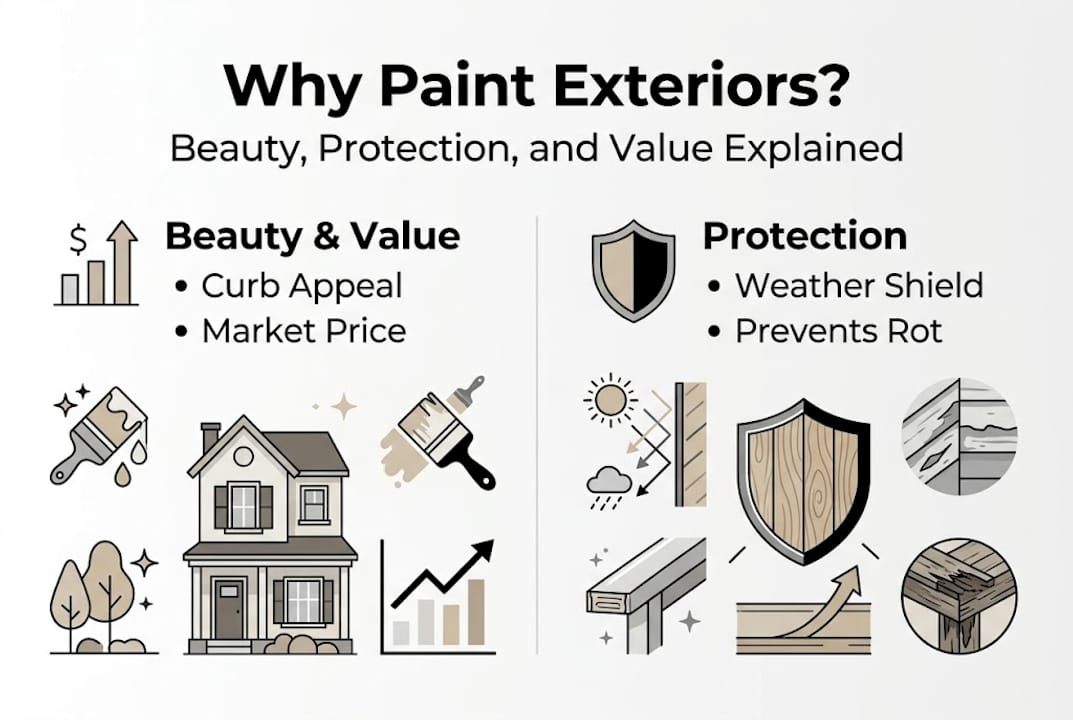
The best times in South West UK are spring and early autumn, with temperatures between 10 and 25°C and dry weather. Summer can work well too, but avoid painting in direct, intense sunlight as the paint can dry too quickly and leave brush marks or uneven coverage.
Season | Suitability | Notes |
Spring | Excellent | Mild temps, lower humidity, longer dry spells |
Summer | Good | Avoid peak heat and direct sun |
Autumn | Good | Watch for early frosts and shorter days |
Winter | Poor | Too cold, too damp, poor adhesion |
Here’s a step-by-step process that professionals follow for a lasting finish:
Clean the surface thoroughly, removing dirt, algae, and loose material
Repair cracks and gaps using exterior-grade filler, allow to cure fully
Sand rough areas to create a smooth, even surface for adhesion
Apply a primer or stabiliser suited to the substrate
Apply the first topcoat and allow to dry completely before the second
Apply the second topcoat for full coverage, colour depth, and protection
For South West UK painting tips specific to local conditions, we’ve put together a detailed guide. You can also explore our advice on weather and timing for painting to plan your project with confidence.
Pro Tip: Never paint over a damp surface. If rain has fallen recently, wait at least 24 to 48 hours before applying any coating. Even surfaces that look dry can hold moisture beneath the skin. Our professional preparation advice goes into detail on how to check surfaces properly before you begin.
How to recognise when your exterior needs repainting
Having explored how and when to paint, it’s crucial to know the warning signs before costly damage occurs. The good news is that your home will usually tell you when it needs attention. You just need to know what to look for.
Preparation is crucial; delay can lead to structural defects that are far more expensive to address than a straightforward repaint. Catching the early signs means you’re fixing a surface problem, not a structural one.
Here are the key warning signs to watch for:
Peeling or flaking paint: The coating has lost adhesion and is no longer protecting the surface beneath
Bubbling or blistering: Moisture is trapped beneath the paint film, often indicating a damp problem
Cracking or crazing: The paint has become brittle, usually from age or UV exposure
Chalking: A powdery residue on the surface signals the binder in the paint has broken down
Visible mould or mildew: The coating has failed and moisture is penetrating the surface
Fading or discolouration: UV damage has degraded the colour and protective properties
Bare wood or masonry: Any exposed substrate is vulnerable to immediate weather damage
A useful habit is to do a visual check of your exterior twice a year, once in spring and once in autumn. Walk around the full perimeter of your home and look closely at areas that take the most punishment: north-facing walls, around window frames, soffits, and any surfaces close to ground level.
Pro Tip: Run your hand across a painted masonry wall. If a white, chalky residue comes off on your palm, the paint is breaking down and repainting should be planned soon. Our guide on signs you need exterior painting covers each warning sign in more detail. If you’re unsure about surface condition before repainting, our advice on preparation for painting will help you assess what’s needed.
A professional’s perspective: what most homeowners get wrong about exterior painting
Here’s the honest truth from years of working on South West UK homes: most paint failures aren’t about the paint. They’re about the preparation. We regularly see jobs where a homeowner has bought quality paint, spent a weekend applying it, and then watched it peel within a year. The product wasn’t the problem. Skipping the prep was.
DIYers consistently underestimate two things: surface preparation and timing. Painting over algae, damp, or loose material is the single most common mistake we encounter. The second is painting in the wrong conditions, too cold, too hot, or with rain forecast.
In our experience, roughly 80% of a finish’s longevity comes down to preparation, not the product itself. A mid-range paint applied over a properly cleaned, primed, and repaired surface will outlast a premium paint slapped over a dirty wall every single time. The techniques professionals use aren’t secret. They’re just disciplined and thorough.
Cheap paint and rushed jobs deteriorate rapidly in the South West climate. The investment in doing it properly the first time always costs less than fixing a failed job.
Ready to transform and protect your home?
If this article has made one thing clear, it’s that exterior painting is about far more than colour. It’s about protecting your home from the South West’s demanding climate, preserving its value, and avoiding the kind of structural damage that costs far more to fix than a professional paint job ever would.

At A Brush With Gus, Gus and Rhys bring hands-on expertise to every project, understanding the local climate, the right materials, and the preparation steps that make a finish last. Whether you’re planning a full exterior repaint or need advice on where to start, our professional exterior painting service is built around quality and reliability. Explore our full range of all home services and get in touch for a tailored quote today.
Frequently asked questions
How often should I repaint my home’s exterior in the South West UK?
Most surfaces benefit from repainting every 5 to 7 years, though correct timing and preparation can extend this interval by ensuring the coating bonds properly and lasts longer.
What weather conditions are best for exterior painting?
Aim for mild, dry conditions with temperatures between 10 and 25°C. Best applied in dry conditions with no rain expected for at least two to three days after application.
Does exterior paint really protect my home, or is it just decorative?
Quality exterior paint provides effective protection against moisture, UV damage, and weathering, actively shielding timber and masonry from deterioration rather than simply improving appearance.
Can I paint over old exterior paint or does it need to be removed?
You can paint over existing coatings if they are sound and well-adhered, but professional preparation is crucial and any flaking, loose, or bubbling paint must be fully removed before repainting begins.
Recommended
Comments