
Decorating project management: a practical guide

TL;DR:
Decorating project management involves coordinating scope, budget, and timeline across all project phases to ensure timely completion. Proper documentation, communication, and procurement planning prevent common issues like scope creep and delays. Applying the PMBOK five-phase cycle leads to smoother projects and higher client satisfaction.
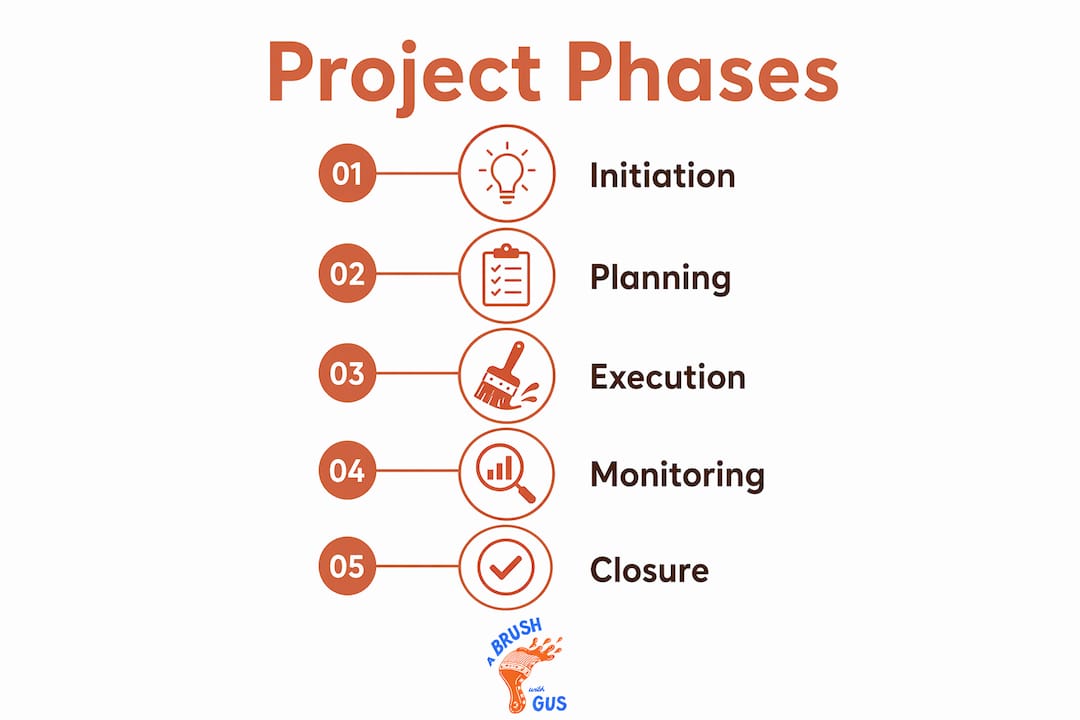
Decorating project management is defined as the structured coordination of scope, budget, timeline, and resources to deliver a decorating project from concept to completion. The industry standard framework for this process is the PMBOK five-phase cycle: initiation, planning, execution, monitoring and controlling, and closure. These phases apply directly to decorating project planning, whether you are refreshing a single room or managing a full exterior repaint. Understanding this framework is the difference between a project that runs smoothly and one that stalls, overspends, or disappoints. Abrushwithgus applies these principles on every job across the South West.
What is decorating project management and why does it matter?
Decorating project management is the systematic coordination of scope, budget, timeline, and resources across all five PMBOK phases. The term “project coordination” is also used in the industry, particularly to distinguish decorating work from construction management under UK law. Both terms describe the same core discipline: keeping every moving part of a decorating job aligned from the first client conversation to the final sign-off.

Without this structure, even straightforward jobs go wrong. A painter arrives before the plasterer has finished. A client changes the colour scheme mid-job without a formal approval process. Materials are ordered too late and the whole schedule slips by two weeks. Decorating project management prevents these failures by building accountability into every stage.
The discipline matters equally for homeowners managing their own refurbishment and for professional decorating firms coordinating multiple trades. The scale differs, but the principles do not. Scope, budget, timeline, and communication are the four pillars that every successful decorating project rests on.
What are the essential phases of a decorating project?
The five PMBOK phases translate directly into decorating practice. Each phase has a clear purpose and a set of deliverables that move the project forward.
Initiation. Define the project goals, agree the scope, and identify all stakeholders. For a decorating job, this means deciding which rooms are included, what finishes are required, and who has authority to approve changes.
Planning. Set the budget, build the timeline, and confirm resource availability. This phase produces the documents that govern every decision that follows.
Execution. Coordinate suppliers, schedule trades, and carry out the physical work. The project manager acts as the communication hub between the client, the decorating team, and any other contractors on site.
Monitoring and controlling. Track progress against the plan, catch errors early, and manage any changes through a formal approval process. Regular client check-ins and site audits are the primary tools at this stage.
Closure. Complete final quality checks, obtain client sign-off, and document lessons learned. A clean handover protects both the client and the decorating firm.
Pro Tip: Create a one-page project brief at the initiation stage. It should list the agreed scope, the budget range, the key dates, and the names of everyone authorised to approve changes. This single document prevents most disputes before they start.
Phase | Key deliverable |
Initiation | Agreed scope and stakeholder list |
Planning | Budget, timeline, and resource schedule |
Execution | Completed decorating work to specification |
Monitoring and controlling | Change log and progress reports |
Closure | Client sign-off and project record |
How do you manage budgeting and scope in decorating projects?
Budget management in decorating projects works best with ranges rather than fixed figures. Setting a budget range gives you room to prioritise key elements, such as a premium finish on a feature wall, without freezing the entire project when costs shift. Fixed budgets create decision fatigue the moment an unforeseen cost appears.
Scope creep is the single most common cause of cost overruns in decorating projects. Undocumented scope changes routinely add 10–20% to final costs. The fix is straightforward: write down exactly what is included in the project and what is not, then require written approval for any change to that list.
Effective scope management rests on three practices:
Document the scope of work in full. List every room, surface, finish, and material. Ambiguity is where disputes begin.
Build a formal change approval process. Any addition to the scope, however small, should require a written request and a signed approval before work proceeds.
Revisit the budget at each phase gate. Comparing actual spend against the plan at the end of each PMBOK phase catches overspend before it compounds.
Pro Tip: When a client asks for an addition mid-project, respond with a written change request form before agreeing to anything verbally. This protects both parties and keeps the budget accurate.
The role of decorators in managing scope is often underestimated. A professional decorator who flags a scope issue early saves the client money and protects the project timeline.
What communication strategies keep decorating projects on track?
Centralising all project communication in a single channel is the most effective way to prevent errors and protect design integrity. Scattered feedback across text messages, emails, and verbal conversations creates conflicting instructions. One dedicated channel, whether that is a project management app, a shared document, or a structured email thread, keeps every decision traceable.
The project manager’s primary job during execution is communication orchestration. This means:
Consolidating all client feedback before passing it to the decorating team
Scheduling weekly check-ins with the client to review progress and confirm upcoming decisions
Logging every approval and change request in writing
Confirming material orders and delivery dates in advance to avoid last-minute surprises
“Effective project management is primarily a risk-mitigation strategy to prevent costly delays and communication breakdowns.” — Interior design project management insights
Client availability for decisions is a factor that most project plans underestimate. When a client cannot approve a paint colour or a material substitution quickly, the whole schedule stalls. Documenting the client’s availability at the kickoff meeting, and agreeing response time expectations in writing, prevents approval bottlenecks from derailing the timeline.
What practical challenges affect decorating project timelines?
Procurement is the most predictable source of timeline risk in decorating projects. Custom and luxury furnishings carry lead times of 2–3 months or more. Ordering these items at the planning stage, rather than waiting until execution begins, is standard practice among experienced project managers. Building a schedule cushion of at least two weeks around every custom order protects the overall deadline.
UK regulations add a layer of complexity that many clients do not anticipate. The Construction (Design and Management) Regulations 2015 classify interior designers and decorating professionals as “designers” with specific health and safety obligations. These duties apply even to straightforward painting and decorating jobs. Breaching CDM 2015 carries criminal law consequences, not just civil liability.
Pro Tip: If you are managing a decorating project that involves any structural or building work alongside the decoration, seek clarity on CDM 2015 responsibilities before work starts. The legal boundary between decorating project coordination and construction management matters.
Challenge | Practical solution |
Custom furnishing lead times | Order at planning stage; build a two-week schedule cushion |
Client approval delays | Document availability at kickoff; agree response time expectations |
Scope creep | Use written change requests; review scope at each phase gate |
CDM 2015 compliance | Clarify designer duties before work begins |
The distinction between decorating project management and construction project management is also worth understanding clearly. Decorating professionals use “project coordination” as their preferred term to avoid legal confusion with construction management roles. This is not just semantics. It clarifies liability, sets client expectations accurately, and keeps the project within the correct regulatory framework.
Key takeaways
Decorating project management requires clear scope documentation, a flexible budget range, structured communication, and proactive procurement to deliver projects on time and within cost.
Point | Details |
Use the PMBOK five-phase cycle | Apply initiation, planning, execution, monitoring, and closure to every decorating project. |
Document scope and changes in writing | Written agreements on deliverables and a formal change process prevent 10–20% cost overruns. |
Set a budget range, not a fixed figure | Ranges allow adaptive allocation and prevent decision fatigue when unforeseen costs arise. |
Plan for procurement lead times | Order custom items at the planning stage and build schedule cushions of at least two weeks. |
Understand CDM 2015 obligations | UK regulations classify decorating professionals as designers with enforceable health and safety duties. |
Why rigour in project management pays off every time
People often ask me whether all this structure is really necessary for a painting and decorating job. My honest answer is yes, and the reason is simple: the jobs that go wrong almost always fail at the same points. The scope was never written down. The client changed their mind and nobody documented it. Materials arrived late because nobody checked the lead time. These are not complex problems. They are predictable ones.
What I have learned from years of working on domestic and exterior projects across the South West is that the clients who are happiest at the end are the ones who had clear expectations set at the beginning. Not because the work was easier, but because they knew what was happening and when. That transparency comes from process, not from talent alone.
The other thing I would say is that communication is where most projects actually succeed or fail. A decorator who keeps a client informed, flags issues early, and documents every decision builds trust that survives the inevitable small problems. A decorator who goes quiet and hopes problems resolve themselves does not. The interior decorating process is as much about managing people as it is about managing paint.
If you take one thing from this, let it be the value of the written scope. Write it down at the start. Get it signed. Review it at every phase. That single habit will save you more time and money than any other practice in this guide.
— Angus
How Abrushwithgus delivers well-managed decorating projects
Abrushwithgus brings the same structured approach described in this guide to every job across the South West. From the initial quote through to final sign-off, every project is managed with a clear scope, an agreed timeline, and consistent communication throughout.
Whether you need domestic decorating services for an interior refresh or a full exterior home repaint, Abrushwithgus handles the coordination so you do not have to. Brothers Gus and Rhys run every project with the reliability and quality finish that their South West clients have come to expect. Get in touch for a no-obligation quote and see how a properly managed decorating project feels from start to finish.
FAQ
What is decorating project management in simple terms?
Decorating project management is the process of planning, organising, and overseeing a decorating job to meet agreed design goals, budget, and deadlines. It follows the five PMBOK phases: initiation, planning, execution, monitoring, and closure.
How does scope creep affect decorating projects?
Undocumented changes to the agreed scope routinely add 10–20% to final project costs. A written change approval process is the standard method for controlling scope creep.
Do UK CDM 2015 regulations apply to decorating projects?
Yes. The Construction (Design and Management) Regulations 2015 classify decorating professionals as “designers” with enforceable health and safety obligations, even on straightforward painting and decorating jobs.
How far in advance should I order materials for a decorating project?
Custom and luxury furnishings carry lead times of 2–3 months or more. Experienced project managers order these items at the planning stage and build a schedule cushion to protect the overall deadline.
What is the difference between decorating project management and construction project management?
Decorating professionals use the term “project coordination” to distinguish their role from construction management, which carries different legal duties under CDM 2015. The distinction clarifies liability and sets accurate expectations for clients and contractors.
Recommended
Comments