
The role of painting in home renovation: boost value
TL;DR:
Proper painting enhances property value, protects surfaces, and improves visual appeal.
Professional techniques ensure lasting, high-quality finishes that DIY work often can’t achieve.
Choosing the right paints for regional challenges is crucial for durability and maintaining historic accuracy.
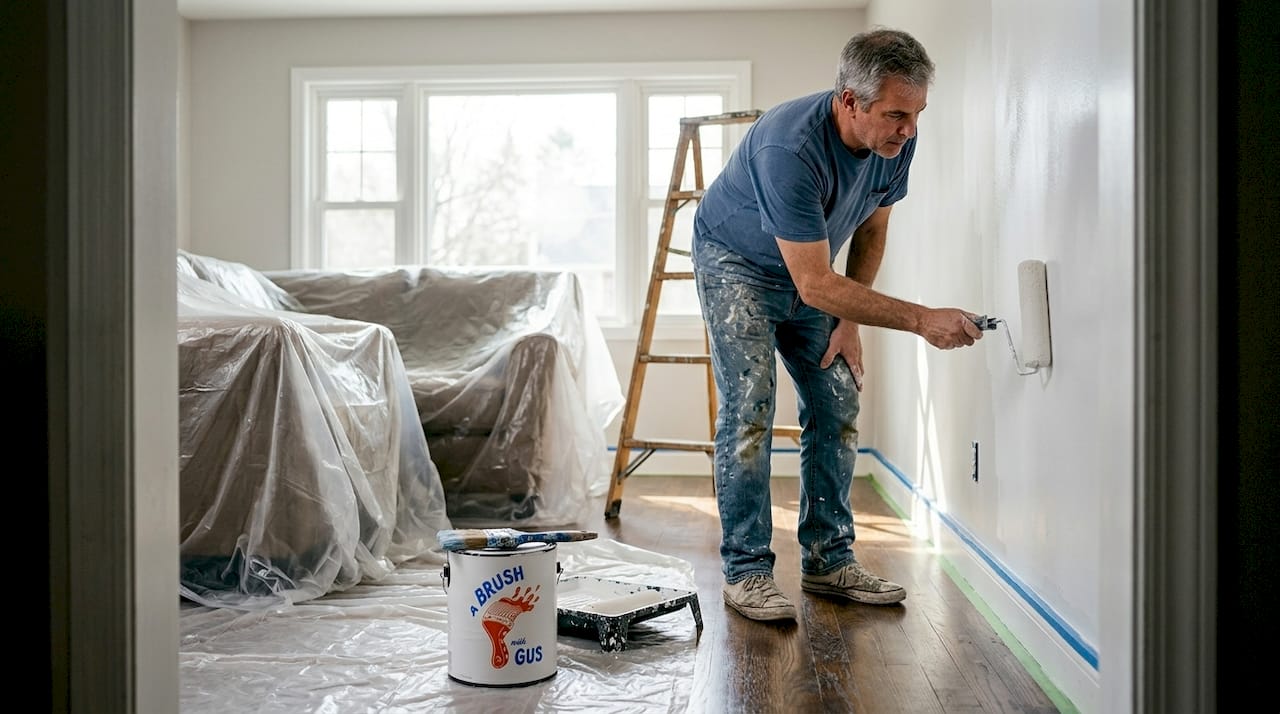
Fresh paint is often treated as the final flourish of a renovation, something you do once the real work is done. That thinking is costing South West homeowners real money. A well-executed paint job does far more than make a room look tidy. It shapes how buyers perceive a property, protects surfaces from the region’s damp and salty air, and can add thousands to a home’s market value. In this guide, we’ll walk through why painting sits at the heart of any successful renovation, which techniques and paint types matter most, and how to make every brushstroke count.
Table of Contents
Key Takeaways
Point | Details |
Paint adds property value | A professional paint job can strongly enhance your home’s market value and appeal. |
Preparation ensures lasting results | Proper surface preparation and paint selection are essential for a flawless, durable finish. |
Match paint to property needs | Choose paint types that address local challenges like humidity, salt air, or period features. |
Professional work reduces risk | Investing in skilled painters helps you avoid common mistakes and achieve the best renovation outcome. |
Why painting is central to successful home renovation
Most people think of painting as cosmetic. It isn’t. Paint is the layer between your walls and the world, and it does a remarkable amount of heavy lifting. It seals surfaces, resists moisture, reflects light, and communicates to anyone walking through the door whether a home is cared for or neglected. That first impression is not trivial.
For prospective buyers, the state of the paintwork is one of the fastest signals of overall upkeep. Scuffed skirting boards, yellowing ceilings, or peeling exterior render all suggest deeper problems, even when there are none. Conversely, a crisp, well-chosen colour scheme makes a property feel move-in ready. Boost value and appeal with a paint scheme that is carefully selected, and you can significantly raise both buyer interest and market price.
“A well-chosen paint scheme can significantly increase both buyer appeal and market price.” That is not marketing language. It reflects what estate agents and surveyors observe every day.
There is also the DIY trap to consider. Many homeowners assume they can save money by painting themselves, and in theory they can. In practice, professional decorator value research consistently shows that DIY painting may save upfront but often costs more by inviting mistakes. Uneven coverage, missed priming, and poor edge work all require remedial attention, sometimes within a year.
Understanding the benefits of professional painters goes beyond aesthetics. Here is a summary of what a quality paint job actually delivers:
Increased property value through improved kerb appeal and interior presentation
Surface protection against moisture, UV damage, and general wear
Mood and atmosphere shaped by colour temperature and finish choice
Compliance with period property requirements where heritage paints are needed
A sense of completion that ties together all other renovation work
If you are planning a renovation and wondering where to focus your budget, the professional painting guide makes a compelling case for treating paint as an investment rather than an afterthought. With painting’s multi-faceted role established, let’s see what makes a professional job stand out.
Professional painting methodologies for lasting renovation results
The difference between a paint job that looks brilliant for a decade and one that starts peeling within eighteen months is almost entirely down to preparation and technique. This is where professionals earn their fee.
A proper professional methodology follows a clear sequence:
Surface cleaning to remove grease, dust, and contaminants that prevent adhesion
Crack and hole repair using appropriate fillers, sanded flush once dry
Priming to seal porous surfaces and create a uniform base for topcoats
Cutting in along edges, corners, and trim with a brush before rolling
Rolling in a ‘W’ pattern to distribute paint evenly without heavy lines
Applying two full coats, allowing adequate drying time between each
Decorator prep standards confirm that thorough prep steps like cleaning, repairing, and priming are essential to a lasting result. DIYers most commonly skip steps one through three, which is precisely why their results deteriorate faster.
The ‘W’ pattern for roller application is worth explaining. Rather than rolling in straight up-and-down stripes, you apply paint in a rough W shape, then fill it in without lifting the roller. This prevents the uneven ridges that form when you reload and restart in a new spot.
Pro Tip: Always maintain a ‘wet edge’ while painting. This means working quickly enough that you are always blending into paint that has not yet dried. Letting sections dry before you reach them creates lap marks that are visible in raking light, and nearly impossible to fix without repainting the entire surface.
Here is how the two approaches compare:
Factor | DIY approach | Professional approach |
Preparation time | Often skipped or minimal | Thorough, typically 40% of total job time |
Priming | Frequently omitted | Always included where needed |
Finish quality | Variable, lap marks common | Consistent, smooth coverage |
Longevity | 2 to 4 years typical | 7 to 10 years with quality materials |
Cost over 10 years | Higher due to repeat work | Lower overall investment |
For a deeper look at what separates amateur from expert results, the painting techniques for homeowners resource covers the finer points in detail. Achieving quality finishes consistently requires both the right tools and the discipline to follow each step without shortcuts. Now that you’ve seen how methodology shapes results, it’s vital to factor in regional specifics.
Choosing the right paints for South West UK homes
Not all paints are created equal, and in the South West, that matters more than most homeowners realise. The region’s coastal exposure, high rainfall, and significant stock of period properties create painting challenges you simply will not encounter in a modern inland home.
Regional painting challenges confirm that coastal salt, high humidity, and period properties demand special paint choices. Using the wrong product can accelerate deterioration, cause damp problems, and even breach planning conditions on listed buildings.
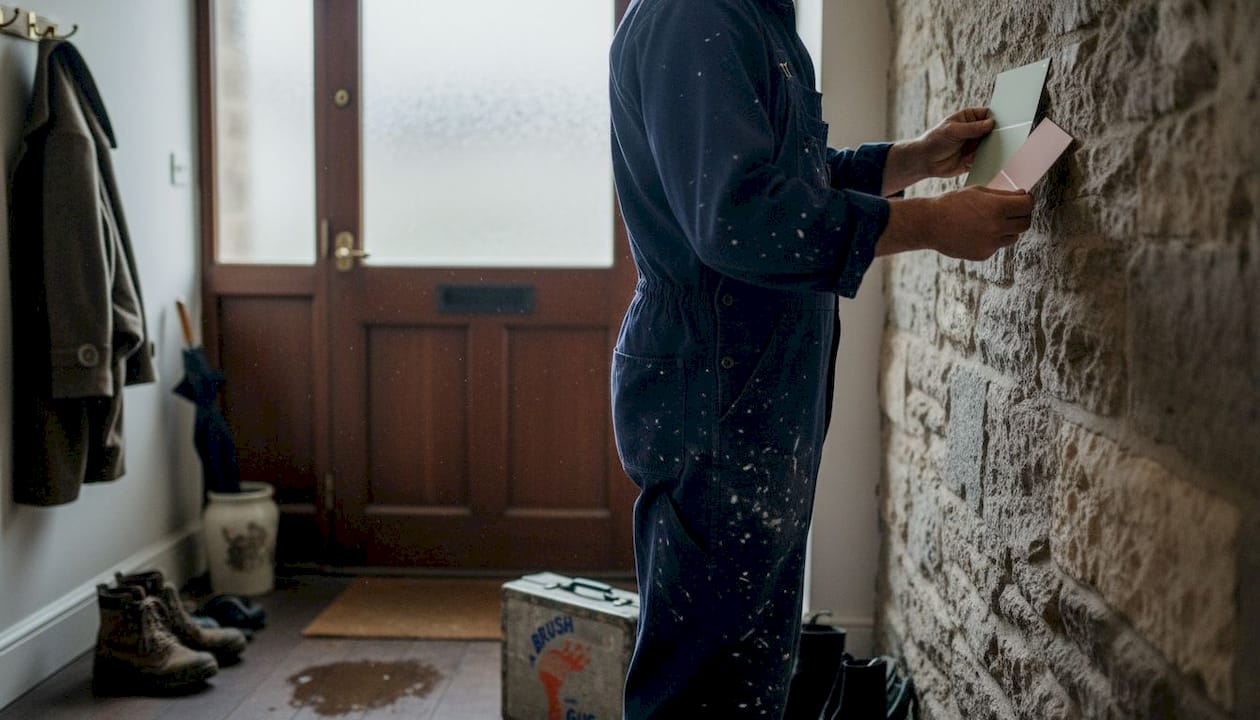
Here is a practical reference for matching paint type to common South West challenges:
Challenge | Recommended paint type | Why it matters |
Coastal salt air | Exterior masonry paint with high elasticity | Resists cracking as surfaces expand and contract |
High indoor humidity (bathrooms, kitchens) | Anti-mould, moisture-resistant emulsion | Prevents spore growth and surface staining |
Period stone or lime-render walls | Breathable, microporous or lime-based paint | Allows moisture to escape without trapping damp |
Timber windows and doors | Flexible gloss or satin with UV resistance | Handles movement and sun exposure without flaking |
High-traffic hallways | Durable, washable matt or eggshell | Withstands scuffs and regular cleaning |
Before purchasing paint, run through this checklist:
What is the surface material (plaster, stone, timber, masonry)?
How is the room or area used, and how much moisture or traffic does it see?
Is the property in a conservation area or listed, with specific material requirements?
What is the level of coastal or weather exposure for exterior surfaces?
Does the existing finish need stripping, or can new paint adhere directly?
Pro Tip: Never apply a non-breathable paint to a period stone or lime-render wall. Moisture that cannot escape through the wall surface will push outward through the paint film, causing blistering and potentially damaging the original fabric of the building.
For guidance on selecting the right product, the best paint finishes guide and the interior paint options resource both break down the options clearly. Armed with suitable paint options, consider how the finish and details ultimately shape renovation quality.
How painting maximises property value and liveability
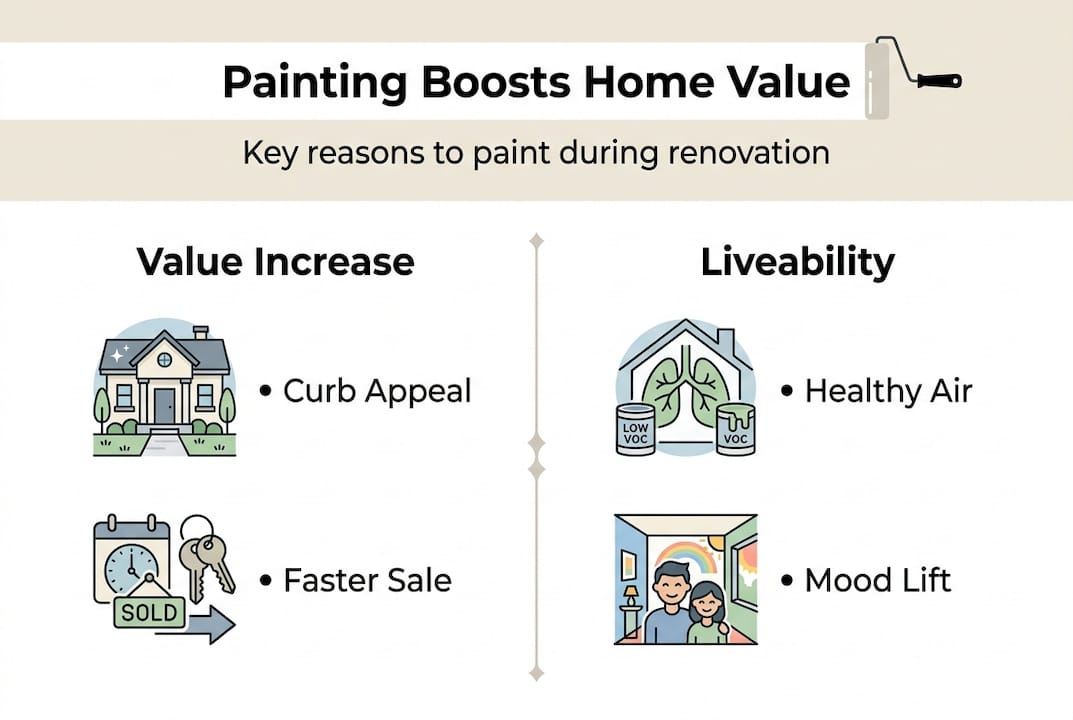
Painting’s influence on property value is more concrete than most homeowners expect. Estate agents frequently cite presentation as a decisive factor in both sale speed and final price. Paint is the single most visible element of that presentation.
Certain areas of the home yield a disproportionately high return when repainted well:
Entryways and hallways set the tone for the entire property and are seen by every visitor
Kitchens benefit enormously from fresh, light colour schemes that make the space feel larger
Exterior facades have the greatest impact on kerb appeal and first impressions from the street
Bathrooms with moisture-resistant finishes signal quality maintenance to buyers
Period features such as cornicing, dado rails, and fireplaces gain prominence with the right colour contrast
“Painting is one of the highest-return investments a homeowner can make before selling, with relatively low cost compared to the uplift it creates in perceived value and buyer confidence.”
Beyond the financial case, painting also improves daily liveability. The right colours reduce eye strain in workspaces, create warmth in living rooms, and make small rooms feel more open. Anti-mould finishes in bathrooms and kitchens improve air quality. Durable washable paints in hallways reduce the ongoing maintenance burden.
A fresh, appropriate paint job can also help ensure value-adding paint compliance in renovations, particularly where planning conditions or building regulations apply to period or listed properties. Investing in home painting is therefore not just about looks. It is about protecting your renovation investment for years to come. With these strategies, you’re now well-equipped for a transformation, yet professional insight still matters most.
Why cutting corners on painting is a renovation’s biggest false economy
After years working on South West homes, we have seen the same pattern repeat itself. A homeowner completes a thoughtful, well-funded renovation, then decides to save a few hundred pounds by rushing the painting or doing it themselves. Twelve months later, they are back in touch asking why the paint is peeling in the bathroom, or why the exterior is already looking tired.
The problem is that the consequences of poor painting are invisible at first. The peeling starts at the edges. The mould appears behind furniture. The lap marks only show up in winter light. By the time the issues are obvious, remediation costs more than the original professional quote would have.
What separates a lasting finish from a frustrating one is almost entirely the prep work and technique that nobody sees. That invisible foundation is what why pros matter comes down to in practice. It is not about the paint on the tin. It is about the hours of preparation underneath it.
Pro Tip: Always budget for professional painting in high-wear and high-impact spaces such as hallways, kitchens, and exterior facades. These are the areas where quality shows most clearly and where poor workmanship costs the most to fix.
Ready to transform your space? Get professional results
If this guide has shown you anything, it’s that painting is far too important to leave to chance or to cut corners on. The right finish, applied properly, protects your home, lifts its value, and makes every room a pleasure to live in.

At A Brush With Gus, we understand South West homes inside and out. Our domestic painting services cover everything from period cottages to modern new builds, while our exterior home expertise tackles the region’s toughest weather conditions. We also offer specialist UPVC window and door spraying for a factory-fresh finish without the cost of replacement. Get in touch with Gus and Rhys today for a no-obligation quote and find out what a genuinely professional finish feels like.
Frequently asked questions
Does painting really increase the value of my home?
Yes. A well-chosen paint scheme can significantly raise sale price and attract more buyers, particularly when key areas like the exterior, hallway, and kitchen are freshly decorated.
What paint types should I choose for a period home in the South West?
Always use breathable paints for period properties. Period properties need breathable paints to avoid trapping moisture behind the paint film, which can damage original lime render and stonework.
How long should a newly painted room be left before using it?
Most rooms need at least 24 hours to dry, but high humidity delays drying especially in coastal properties, so 48 hours or more is a safer target in the South West.
Is it worth hiring a professional painter for my renovation?
Absolutely. DIY saves upfront but often costs more long-term through mistakes and remedial work. For value-adding renovations, professional painting delivers a far better return on investment.
Recommended
Comments