
Avoid Delays: 4 Realistic Interior Painting Timelines for UK Homes
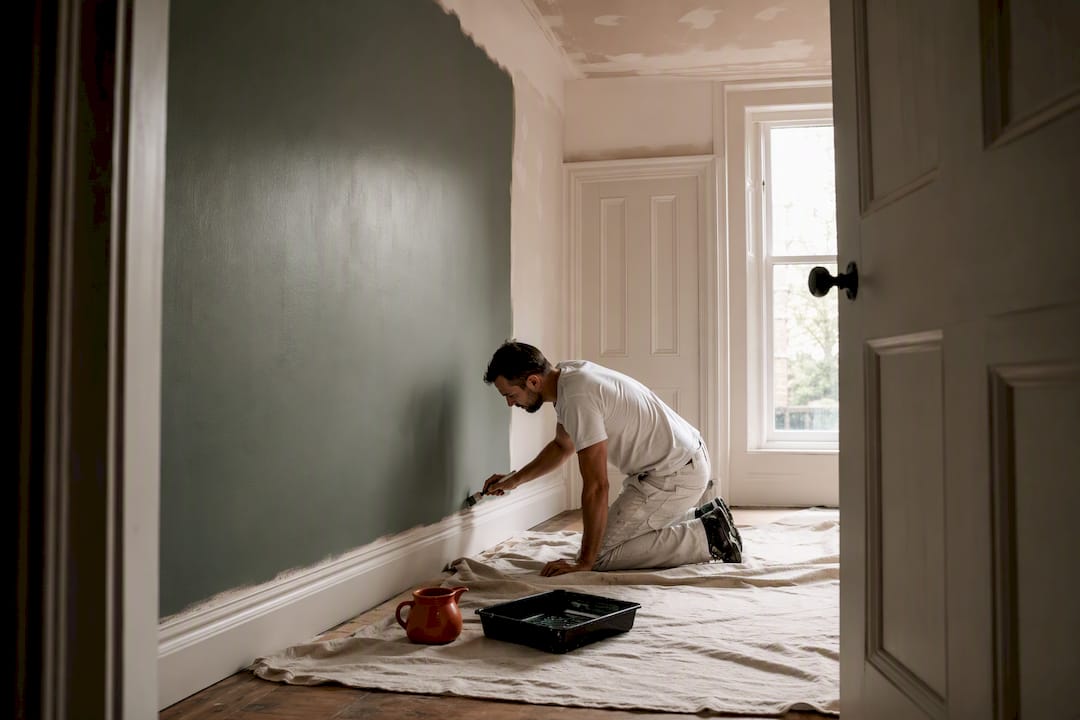
Most walls-only rooms take a single day to paint, while a full house repaint with a professional crew typically runs several working days. The real caveat is prep: unrepaired plaster, colour changes needing primer, or a house full of trim and doors can add days to either estimate, so the state of your surfaces matters more than the size of your paint tin.
TL;DR:
Surface conditions such as damaged plaster, damp patches, or the need for primer coats can add several days to the painting schedule, especially for repairs and prep work.
Trim, doors, and high ceilings often account for half or more of the total labor time, with detailed brushwork requiring multiple coats and drying between layers.
Full cure of paint can take up to 30 days, during which homeowners should avoid heavy contact or cleaning to prevent future touch-ups.
A typical three-bedroom house takes around 3 to 5 days with a professional crew, while DIY projects usually span one to two weeks due to slower workflow and drying times.
A thorough pre-quote walkthrough helps identify potential delays caused by surface issues or extra elements, enabling more accurate scheduling and fewer surprises.
Table of Contents
What is the stage-by-stage breakdown of an interior painting timeline?
A realistic interior painting schedule breaks down into distinct stages, and each one eats a predictable chunk of the calendar. Knowing the bands lets you sanity-check a quote rather than just trusting the total figure at the bottom.
Survey and protection: Usually 1 to 2 hours per room. Furniture gets moved or covered, floors get sheeted, and sockets and fittings get masked.
Repairs and patching: Anywhere from an hour for a few nail holes to two full days if you’re dealing with cracked plaster, damp staining, or old wallpaper that needs stripping. This is the stage homeowners most often underestimate, and it’s frequently the one that decides whether a job finishes on time.
Priming: Needed for bare plaster, patched areas, or a big colour change (dark to light, or vice versa). Add half a day for a single room, longer for a whole house.
First coat: Walls and ceilings typically take a working day for an average room; a full house takes a day or two depending on crew size.
Second coat: Usually applied the same day or the following morning once the first coat has had its recoat window.
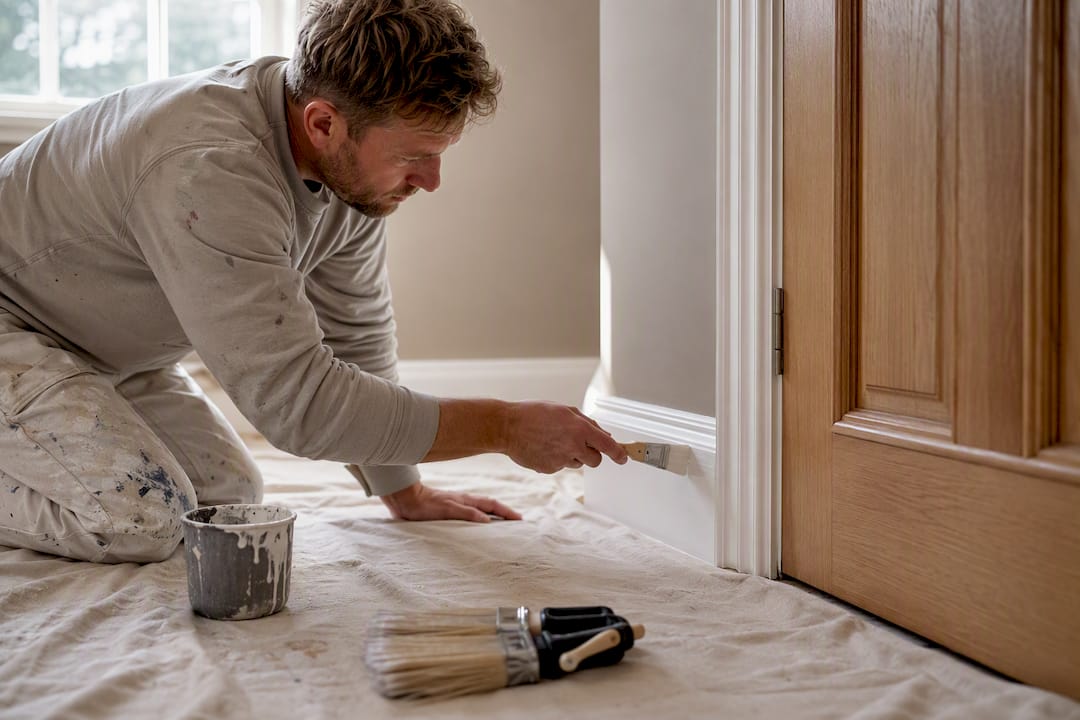
Trim and doors: Disproportionately slow. Skirting, architraves and panelled doors need careful cutting-in, often two coats each, and drying time between them. Detailed brushwork on trim commonly adds a day or more to a room’s schedule compared with a walls-only job.
Add these bands together and you’ll usually land close to what a decent contractor quotes.
Dry time vs cure time: what does “finished” actually mean?
“Dry” and “finished” are not the same thing, and confusing the two causes most of the post-painting mistakes homeowners make. Paint is typically dry to the touch within 1 to 2 hours and safe to recoat in 2 to 4 hours under normal indoor conditions, but that’s a long way from being fully hardened.
Full cure can take up to 30 days. During that window, the paint film is still hardening, even though it looks and feels finished after a day.
Cold rooms, poor ventilation, or high humidity stretch every one of these windows, sometimes significantly. Treat the first month as a settling-in period: avoid hanging heavy pictures with adhesive strips, pushing furniture flush against fresh skirting, or scrubbing walls with anything abrasive. Rushing this stage is how touch-ups end up needing touch-ups.
What do sample day-by-day painting schedules look like?
Numbers are easier to plan around when you can see how they actually play out across a working week. Here’s how three common scopes tend to run.
Single room, walls only (1 day): Morning for prep and masking, midday for the first coat, afternoon for the second once the recoat window has passed. Doable in a single day if the walls are in good condition.
Single room with trim and doors (1 to 2 days): Day one covers prep, priming and wall coats; day two is dedicated to cutting in skirting, architraves and doors, which need their own drying time between coats.
Three-bedroom house, professional crew (3 to 5 days): Day one is prep, patching and priming across every room. Day two is first coats on walls and ceilings. Day three is second coats plus trim work in rooms that are ready. Day four finishes any remaining coats. Day five is touch-ups and a final walkthrough. This rhythm mirrors what most experienced crews report as their standard sequence.
Full house, DIY (1 to 2 weeks): The same total workload as above, but spread across evenings and weekends, with drying time often dictating when you can pick the brush back up.
A crew compresses the calendar mainly through parallel sequencing, prepping one room while paint dries in another. A solo DIYer can borrow the same trick: prep every room first, then rotate between them coat by coat, rather than finishing one room fully before starting the next.
What factors stretch or shrink your painting schedule?
Two houses of identical size can have wildly different timelines, and it’s rarely the paint that’s to blame. Watch for these variables when you’re comparing quotes or setting your own expectations.
Surface condition: Flaking paint, damp patches or crumbling plaster behind furniture only shows up once the room’s been cleared, and it’s the single biggest source of schedule surprises.
Colour change: Going from a dark or saturated colour to something pale almost always means an extra primer coat, sometimes two.
Trim, doors and high ceilings: Panelled doors, deep skirting boards and vaulted ceilings all add time disproportionate to the square footage involved.
Crew size and hours: A two-person crew working full days will always beat a solo painter working evenings, regardless of how good either one is.
Humidity and ventilation: Poor airflow slows every recoat window, sometimes by a wide margin in damp weather.
Occupied vs vacant: Living around wet paint, moving furniture back and forth, and working around a household’s routine all add friction that an empty house doesn’t have.
Pro Tip: Ask your painter to walk the house with you before they quote, room by room, and flag anything that might need repair work. A five-minute walk-round at the quoting stage saves a lot of “we found something” conversations mid-project.
How do you plan and schedule an interior painting project?
A good schedule starts before the first tin of paint is even opened. Use this as a checklist when you’re booking a job or planning your own weekend project.
Ask about coats, prep standard and contingency. A credible quote states the number of coats, the surface prep standard, and an allowance for unforeseen repairs; if a quote skips all three, ask why.
Clear and protect rooms in advance. Move furniture out where possible, secure valuables, and cover anything staying in the room. Detailed prep guidance makes this stage far less of a scramble on the day.
Prioritise visible rooms first. If you’re working to a deadline, such as a move-in date or a family visit, tackle the hallway, living room and entrance first and push trim or a spare room into a second phase.
Sequence around fixtures. Kitchens and bathrooms need extra care around units and appliances; protecting fixtures properly avoids losing a day to cleanup.
Build in contingency. Add at least half a day per room for repairs you haven’t spotted yet, and don’t book a hard deadline the same day the final coat goes on.
What does field experience say about realistic painting timelines?
Homeowners consistently underestimate how long prep takes, and it’s usually the number one reason a quoted timeline slips. A three-day crew job on a typical three-bedroom house breaks down roughly as a full day of prep and patching, a day of first coats, and a day for second coats plus trim, a pace that would take a determined DIY homeowner closer to two weekends of evenings and Saturdays to match.
The most common misjudgement isn’t the painting itself, it’s assuming trim and doors are a quick add-on. In practice, detailed brushwork on skirting and panelled doors is often the single biggest swing factor in whether a “three-day job” finishes on day three or day five. Professional sequencing, prepping every room before painting any of them, is what keeps that variance under control.
What actually matters when planning your painting timeline
The conventional advice on painting timelines tends to fixate on square footage, when the real variable is almost always surface condition and the number of separate elements, walls, ceilings, trim, doors, needing their own coats and drying windows. A 20-square-metre room with sound plaster and no colour change will always beat a 12-square-metre room full of panelled doors and patch repairs.
If there’s one thing worth prioritising above everything else in this guide, it’s asking hard questions at the quoting stage rather than after the brushes are out. A contractor who can tell you the prep standard, the number of coats and a contingency allowance before they start is giving you an honest calendar, not a hopeful one. Homeowners who skip that conversation are the ones who end up frustrated when day three becomes day five.
Trim and doors deserve more respect than they usually get in DIY planning. They look like a finishing touch; in practice, they can be half the labour of the entire room.
— Angus
Book a painting schedule that actually holds
We provide clear scheduling, quoting the prep standard, number of coats, and contingency allowance upfront, so the calendar you’re given at the quote is the one you get on the day.

Our services cover a range of interior painting projects, and we manage each job carefully to understand how surface condition and trim work affect the schedule before booking it in. If you’ve got a deadline, a move-in date, or just want an honest read on how long your project will actually take, get in touch for a domestic painting quote and we’ll walk the rooms with you before we put a date in the diary.
Sources
For technical detail on drying and cure times, DIY.com’s painting guidance is a solid reference. For a fuller look at how professional crews structure their workflow from start to finish, Abrushwithgus’s residential painting process guide covers the sequencing in more depth.
Recommended
Comments